
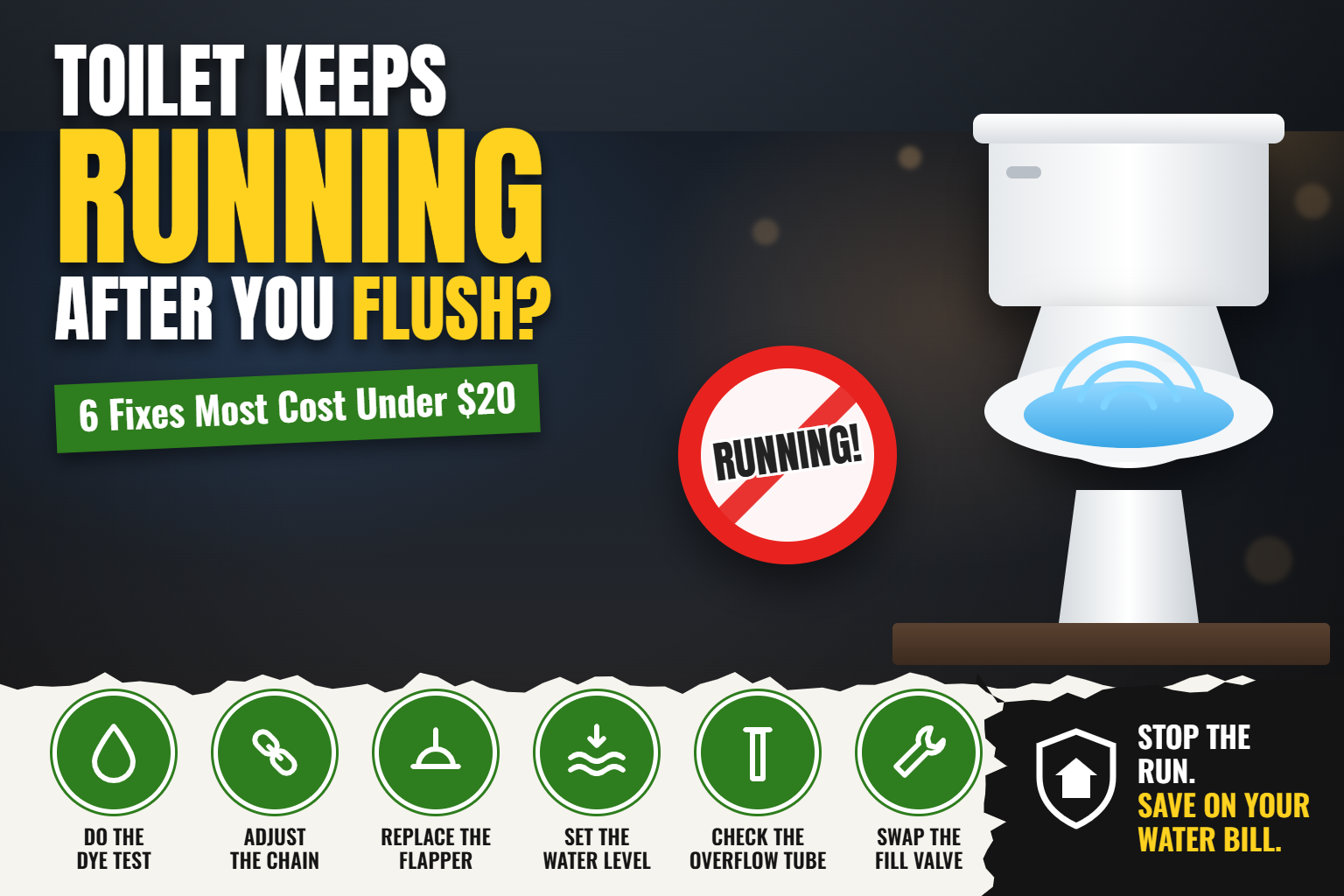
Toilet Keeps Running After You Flush? 6 Fixes (Most Cost Under $20)
Heads up: this post contains affiliate links. If you buy through them, Home Addressed may earn a commission at no extra cost to you.
Flush. Walk away. Hear that faint hiss from the bathroom 10 minutes later? Your toilet’s still running, and every minute it does, clean water you pay for goes straight down the drain.
The good news: a running toilet is almost never a plumber job. Nearly every case comes down to a handful of cheap parts inside the tank, and you can fix most of them in 15 minutes with no tools at all. Take the tank lid off (set it somewhere soft, those things crack) and let’s figure out which one it is.
First, do the dye test
Put a few drops of food coloring in the tank. Don’t flush. Wait 10 to 15 minutes, then look in the bowl. If color shows up in the bowl, water’s leaking past the flapper at the bottom of the tank. That’s a silent leak, and it’s the most common cause by far.
If the bowl stays clear but you still hear running, look at the overflow tube (the open pipe standing up in the middle of the tank). Water spilling into the top of that tube means the tank’s filling too high. Those two clues point you to the right fix below.
1. The flapper chain is too short or tangled
Start here because it’s free. The chain connects the flush handle to the flapper. If it’s too tight, it holds the flapper open just a crack. If it’s too loose, it can get trapped under the flapper and keep it from sealing.
You want about half an inch of slack when the flapper’s closed. Unhook the clip, move it a link or two, flush, and watch it seat. If it’s way too long, snip the extra off so it can’t flop under there again.
2. The flapper is worn out
If your dye test showed color in the bowl and the chain looks fine, the flapper’s the problem. They’re rubber, and after a few years of sitting in water (especially water with chlorine in it), they warp, stiffen, and stop sealing.
Turn off the water at the valve behind the toilet and flush to empty the tank. Unhook the old flapper from the two pegs on the overflow tube, take it with you so you can match the size (most are 2 inch, some newer toilets use 3 inch), and snap the new one on. Wipe the rim it sits on, because mineral crust there can break the seal even with a brand-new flapper.
A universal toilet flapper costs well under $10 and fits most toilets. Honestly, if yours is more than five years old, just replace it while you’re in there.
3. The water level is set too high
If water’s trickling into the overflow tube, the tank keeps refilling forever because it never hits its shutoff point. Look for a line marked inside the tank, or aim for about an inch below the top of the overflow tube.
On a newer fill valve (the tall plastic tower on the left), there’s usually a screw or a clip on the side you turn or slide to lower the float. On an old-school toilet with a big ball float on a metal arm, gently bend the arm down a little. Flush, let it fill, and check the level again.
4. The overflow tube is cracked
This one’s rare, but check it. If the overflow tube itself has a crack below the water line, water drains through it nonstop. A cracked overflow tube usually means replacing the whole flush valve, which means taking the tank off the bowl. It’s doable for a confident DIYer, but if that sounds like a lot, this is the one case where I’d call a plumber.
5. The fill valve is worn out
If the level’s set right, the flapper’s new, and you still hear the tank filling every so often (that random midnight “ghost flush”), the fill valve may not be shutting off fully. Sometimes cleaning it works: turn off the water, pop the cap off the top of the valve, and run the water briefly into a cup held over it to flush out grit.
If that doesn’t fix it, replace it. A complete toilet repair kit with a fill valve and flapper runs about $20 to $30 and comes with instructions that are easier than they look. Lots of people put in the whole kit at once so they’re not back in the tank next month.
6. Hard water is chewing up the parts
If you’re replacing flappers every year or two, look at your water. Hard water leaves mineral scale on the flapper seat and the fill valve, and that crust keeps parts from sealing. Our guide to signs you need a water softener walks through how to test for it. Fixing the water fixes a lot of problems at once.
When it’s not the toilet at all
If you’ve done all this and your water bill still looks weird, you might have a leak somewhere else. A few cheap smart sensors can catch leaks under sinks and behind appliances before they turn into a ceiling stain. We rounded up the best ones in our smart water leak detector guide.
Not sure which parts to buy? See our picks for the best toilet repair kits, fill valves, and flappers.
FAQ
Why does my toilet keep running after I flush?
Usually because the flapper isn’t sealing, the chain is holding it open, or the water level is set so high that water spills into the overflow tube. A food coloring dye test in the tank tells you which one it is in about 15 minutes.
How much water does a running toilet waste?
It depends on how bad the leak is. A slow silent leak can waste a surprising amount over a month, and a toilet that runs constantly wastes much more. Either way, it shows up on your water bill, so it’s worth fixing fast.
Can I fix a running toilet myself?
In most cases, yes. Adjusting the chain or water level takes no tools. Replacing a flapper or fill valve takes 15 to 30 minutes and parts cost under $30. A cracked overflow tube is the main exception, since it usually means removing the tank.
How do I know if my toilet flapper is bad?
Put food coloring in the tank and don’t flush. If color appears in the bowl within 15 minutes, water’s leaking past the flapper. A flapper that feels stiff, warped, or slimy when you touch it is also due for replacement.
Why does my toilet run randomly by itself?
That “phantom flush” means water’s slowly leaking from the tank into the bowl until the fill valve kicks on to top it off. It’s almost always the flapper or a dirty flapper seat.
How often should you replace toilet parts?
Flappers typically last a few years, and less with hard water or chlorine tablets in the tank. Fill valves last longer. If one part fails and the toilet’s old, replacing the flapper and fill valve together saves you a second trip.
Disclosure: Home Addressed may earn a commission if you buy through links on this page, at no extra cost to you. See our affiliate disclosure.

One Comment