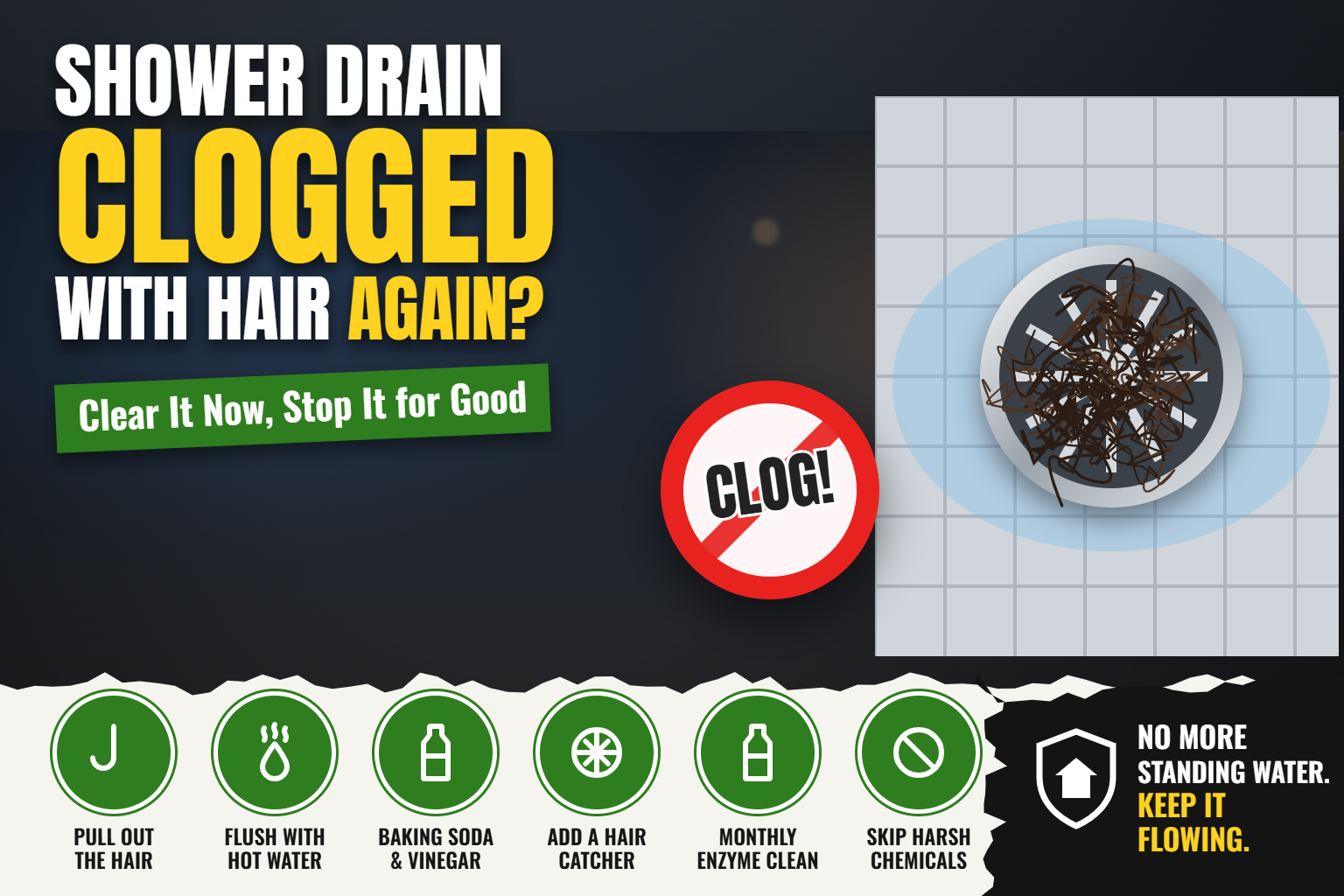
Shower Drain Clogged With Hair Again? Clear It Now and Stop It for Good
Heads up: this post contains affiliate links. If you buy through them, Home Addressed may earn a commission at no extra cost to you.
You’re halfway through your shower and the water’s creeping up over your toes. Again. You cleared this drain, what, three weeks ago?
Hair is the number one cause of shower clogs, and it doesn’t wash away like you’d hope. It tangles with soap scum and conditioner into a slimy rope that catches more hair every day. The fix comes in two parts: get the clog out now, then stop the hair from going down there in the first place. That second part is what most people skip, and it’s why they’re back here every month.
Step 1: Pull the hair out (the gross but fast way)
Most shower clogs sit within a few inches of the drain opening, so you can usually just grab them. Remove the drain cover first. Some lift straight out, some unscrew with a screwdriver, and some twist off. Put a towel down, because what comes out isn’t pretty.
Then use a plastic drain snake. It’s a thin, flexible strip with little barbs along the edges, and a multi-pack costs a few bucks. Push it down slowly, twist, and pull it back up. Wear gloves. You’ll probably pull up a long gray clump on the first try, and the water will start draining again immediately. Repeat until it comes up clean.
No snake? A wire coat hanger straightened out with a small hook bent into the end works in a pinch. Go easy so you don’t scratch the drain or push the clog deeper.
Step 2: Flush it with hot water
Once the hair’s out, run the hottest water from your tap down the drain for a minute or two to wash away loosened soap scum. Skip the boiling-water-from-the-kettle trick if you have PVC pipes or a fiberglass or acrylic shower pan. Boiling water can soften joints and damage some surfaces, and hot tap water does the job.
Step 3: Try baking soda and vinegar for leftover gunk
If it’s draining better but still slow, pour half a cup of baking soda down the drain, follow it with a cup of white vinegar, and cover the drain with a wet rag. Let it fizz for 15 to 30 minutes, then flush with hot water. It won’t dissolve a big hair clog (nothing you pour will do that well), but it helps break up the soap film that hair sticks to.
Step 4: Install a hair catcher (this is the real fix)
Here’s the thing that actually ends the cycle. A hair catcher sits in or over your drain and grabs hair before it goes down the pipe. Once a week you pull it out, wipe the hair into the trash, and pop it back in. Takes ten seconds.
The kind that sits inside the drain opening, like the TubShroom-style hair catcher, works great for most standard drains because hair wraps around the outside of it instead of going down. Flat silicone covers work better on shower floor drains with a flat grate. Either way, it’s about $10 to $20, and in my opinion it’s the single best $15 you can spend in a bathroom.
Step 5: Do a monthly enzyme cleaning
For long hair households, an enzyme drain cleaner once a month helps eat away the soap scum and organic gunk inside the pipe so hair has less to cling to. Use it at night when nobody’s showering so it can sit for hours. It’s slow, gentle, and safe for pipes, which is exactly what you want for maintenance.
Skip the harsh chemical drain cleaners
I’d avoid the heavy-duty chemical clog busters for hair. They often don’t fully dissolve hair clogs, they can damage older pipes and finishes with repeated use, and if they don’t work you’re left with a drain full of caustic chemicals that makes snaking it yourself (or hiring a plumber) more dangerous. If you’ve already poured some in, tell your plumber before they start.
When it’s not just hair
If the drain stays slow after you’ve pulled out the hair, or water backs up in the tub when you flush the toilet, or several drains are slow at once, the clog’s deeper in the line. That’s when a plumber with a motorized auger makes sense. Hard water can also make soap scum build up faster in drains and on fixtures. If you’re seeing white crust on faucets too, our hard water guide is worth a look.
FAQ
What dissolves hair in a shower drain?
Very little dissolves hair well. Strong chemical cleaners can partially break it down but often leave the clog in place and can damage pipes. Pulling the hair out with a plastic drain snake is faster and safer.
How do I unclog a shower drain full of hair without chemicals?
Remove the drain cover and use a plastic barbed drain snake or a bent wire hanger to pull the hair out. Then flush with hot tap water and finish with baking soda and vinegar if it’s still a little slow.
How do I stop hair from clogging my shower drain?
Install a hair catcher in or over the drain and empty it weekly. A monthly enzyme drain treatment also helps keep soap scum from building up inside the pipe.
Does baking soda and vinegar unclog hair?
Not by itself. It helps loosen soap scum and light buildup, but it won’t break up a solid hair clog. Pull the hair out first, then use baking soda and vinegar to clean up what’s left.
Is boiling water safe for a shower drain?
It’s risky with PVC pipes and some acrylic or fiberglass shower pans, since very hot water can soften joints or damage surfaces. Hot tap water is a safer choice.
When should I call a plumber for a clogged shower drain?
Call one if the drain stays slow after you’ve removed the hair, if several drains are slow at once, or if water backs up into the tub when you flush. That points to a clog deeper in the line.
Disclosure: Home Addressed may earn a commission if you buy through links on this page, at no extra cost to you. See our affiliate disclosure.