Dryer Taking Forever Even With a Clean Lint Trap? 6 Fixes (One Prevents Fires)
Heads up: this post contains affiliate links. If you buy through them, Home Addressed may earn a commission at no extra cost to you.
You cleaned the lint screen. You ran a full cycle. You open the door and your jeans are still damp. So you run it again. And again.
When a dryer takes two or three cycles and the lint trap looks clean, the trap isn’t the problem. The problem is almost always somewhere you can’t see: the vent duct behind the dryer and the path out to the exterior wall. And that’s not just annoying. Failure to clean is the leading factor in home dryer fires, according to U.S. Fire Administration data. So this one’s worth fixing this weekend.
Do this 30-second test first
Start the dryer on high heat and go outside to where the vent exits your house. Hold your hand in front of it. You should feel a strong, warm blast of air and see the flap pop open. A weak puff, or no airflow at all, means the vent’s clogged. Now you know where to look.
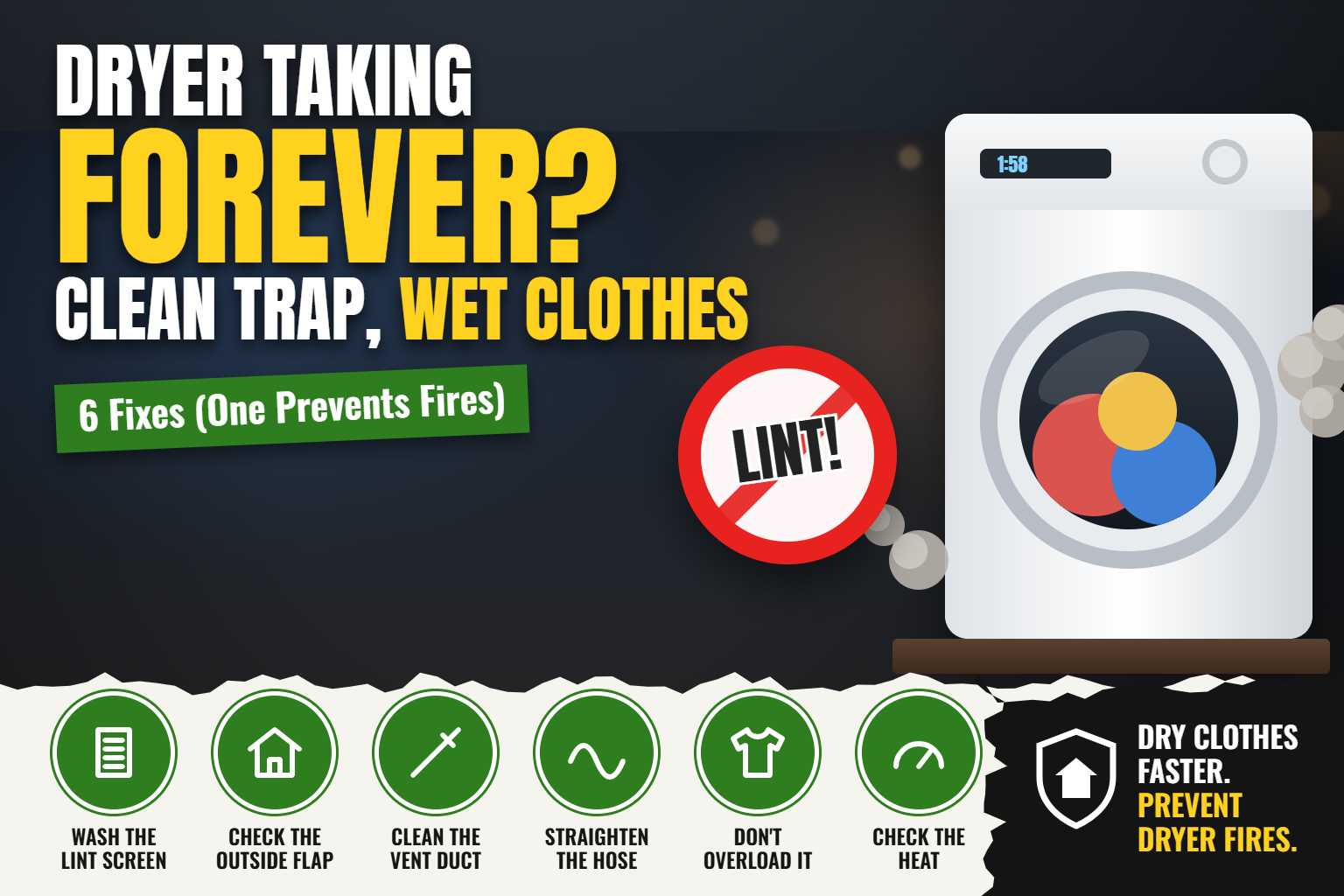
1. Wash the lint screen (not just wipe it)
Dryer sheets leave an invisible waxy film on the lint screen that blocks airflow even when it looks clean. Try this: run water over the screen. If water beads up and sits on top instead of flowing through, it’s coated. Scrub it with warm soapy water and an old toothbrush, rinse, and let it dry completely before you put it back. Do this every few months if you use dryer sheets.
While the screen’s out, use a long lint trap brush to pull out the lint that collects down in the slot. You’ll be shocked how much is in there.
2. Check the outside vent flap
That flap or louver on the exterior wall gets clogged with lint, stuck shut with paint, or blocked by a bird nest (yes, really). Pull off any lint you can reach and make sure the flap swings freely. If it’s a cheap plastic cover with tiny louvers that keep jamming, swap it for a better one. Just don’t use a vent cover with a screen, because screens catch lint and clog fast.
3. Clean the vent duct
This is the big one. Unplug the dryer (and shut off the gas valve if it’s a gas dryer), slide it out from the wall, and loosen the clamp that holds the duct onto the back of the dryer. Pull the duct off and look inside. If you see thick gray lint, that’s your problem.
A dryer vent cleaning kit comes with flexible rods that screw together and a brush on the end. You chuck it into a cordless drill and run it through the duct from the inside, then from the outside, pulling lint out as you go. It’s messy (have a shop vac ready) but it takes about 30 minutes, and kits run roughly $20 to $30. Do it at least once a year, more often if you have a big family or a long vent run.
If your vent runs through an attic or is longer than about 25 feet with several turns, I’d hire a dryer vent cleaning service. Long runs are hard to clean well yourself.
4. Straighten or replace the hose behind the dryer
Pushing the dryer back against the wall often crushes the duct behind it. A kinked or flattened duct chokes airflow and traps lint. And if you see the white vinyl or foil accordion type, replace it. Those are a known fire hazard, and many dryer makers say not to use them.
Use semi-rigid aluminum dryer duct instead. It holds its shape, doesn’t crush as easily, and the smooth inside collects less lint. Keep the run as short and straight as you can, and use foil tape (not screws, which snag lint) at the joints.
5. Don’t overload it
Clothes need room to tumble so hot air can move through them. A dryer stuffed to the top dries slowly and unevenly. Fill it about halfway to two-thirds. And make sure your washer’s spin cycle is doing its job, because soaking-wet clothes going in means much longer drying times coming out.
6. Check whether it’s even heating
If the vent’s clear, the load’s reasonable, and the clothes come out cool and wet, the dryer may not be heating. On electric dryers that’s often a failed heating element or blown thermal fuse. On gas dryers it could be the igniter or gas valve coils. Those parts aren’t expensive, but if you’re not comfortable testing appliance parts with a multimeter, call an appliance repair tech. A dryer that suddenly runs way too hot, or smells like burning, needs to be unplugged and checked right away.
Signs your dryer vent is a fire risk
Pay attention if clothes take more than one cycle, the top of the dryer gets very hot, the laundry room feels humid and warm, you smell something burning, or you see lint collecting around the outside vent. Any of those means clean the vent now, not next month. And make sure your laundry area has a working smoke alarm. If yours has been chirping, here’s how to fix a chirping smoke detector.
While you’re checking the laundry room, make sure you’ve got a working alarm nearby. Here are the best smart smoke and CO alarms that send alerts to your phone.
FAQ
Why are my clothes still wet after a full dryer cycle?
The most common cause is a clogged dryer vent duct that traps hot, moist air. Other causes include a lint screen coated with dryer sheet residue, a crushed duct behind the dryer, an overloaded drum, or a heating part that’s failed.
How often should I clean my dryer vent?
At least once a year. Do it more often if you have a large household, pets, or a long vent run, or any time drying times start creeping up.
Can a clogged dryer vent cause a fire?
Yes. Lint is very flammable, and failure to clean is the leading factor in home dryer fires according to U.S. Fire Administration data. Clean the lint screen every load and the vent duct every year.
How do I know if my dryer vent is clogged?
Run the dryer and check the outside vent. Weak or no airflow means it’s clogged. Long drying times, a hot dryer cabinet, a humid laundry room, and a burning smell are other warning signs.
What type of dryer vent duct is safest?
Rigid or semi-rigid metal duct is the safest choice. Avoid white vinyl and thin foil accordion ducts, which crush easily, trap lint, and are considered a fire hazard by many manufacturers.
Should I clean my lint screen with water?
Yes, every few months. Dryer sheets leave a film that blocks airflow even when the screen looks clean. Scrub it with warm soapy water, rinse, and let it dry completely before reinstalling.
Disclosure: Home Addressed may earn a commission if you buy through links on this page, at no extra cost to you. See our affiliate disclosure.