
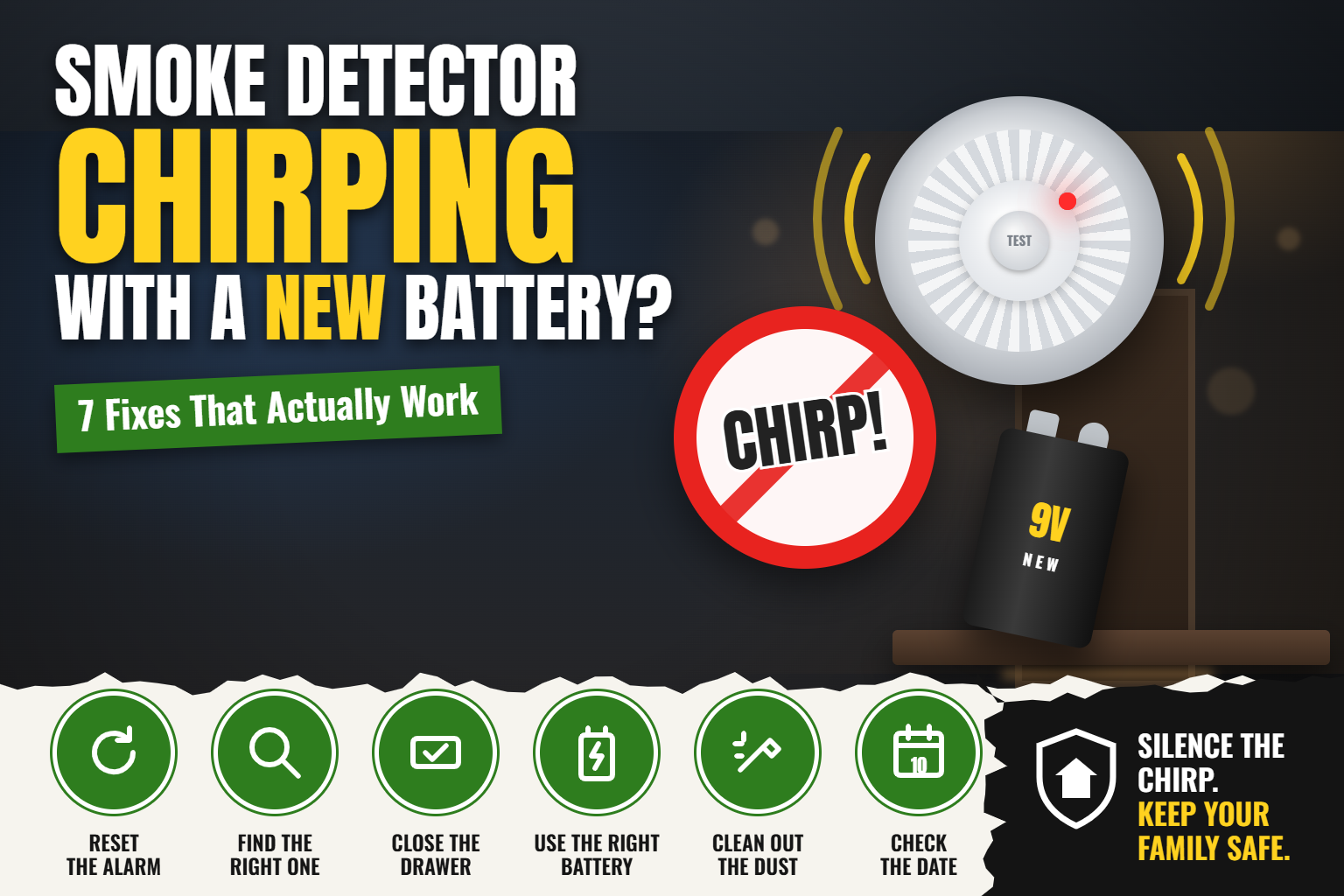
Smoke Detector Chirping With a New Battery? 7 Fixes That Actually Work
Heads up: this post contains affiliate links. If you buy through them, Home Addressed may earn a commission at no extra cost to you.
You climbed the ladder. You swapped in a fresh battery. You climbed down feeling pretty good about yourself. Then, 40 seconds later: chirp.
It’s maddening, and it almost always shows up at 2 a.m. The good news is that a smoke detector chirping with a new battery usually comes down to one of seven fixable things, and most take under five minutes. Work through these in order.
1. The alarm still “remembers” the old battery
This is the big one. Smoke alarms hold a little leftover charge after you pull the battery, and that stored power can keep the low-battery warning alive even after you put a fresh one in. The alarm isn’t broken. It just hasn’t been told the problem is gone.
The fix is a hard reset. Take the battery out (and if it’s hardwired, twist the alarm off its base and unplug the connector). Press and hold the Test button for 15 to 20 seconds. You might hear a short blast, which is normal. Then put the new battery in, reconnect it, and press Test once more to make sure the siren sounds. First Alert’s own support guide recommends this exact method for alarms that keep chirping after a battery change.
Nine times out of ten, you’re done here.
2. You’re fixing the wrong alarm
Chirps bounce off walls and ceilings, so it’s hard to tell which one is complaining, especially in a hallway with two or three alarms close together. If your alarms are interconnected, one unhappy unit can make it sound like the whole house is chirping.
Stand under each alarm and wait for the next chirp. Most alarms also blink a status light when they chirp, so look for the one flashing in time with the sound. Then reset that specific unit.
3. The battery drawer isn’t fully closed
Lots of alarms have a little hinged door or slide-out drawer for the battery. If it’s not latched all the way, the contacts don’t touch properly and the alarm reads it as a dead battery. Push it closed until it clicks. Same goes for a battery that’s in at a slight angle or with a pull tab still stuck under it.
4. You used the wrong battery
Check the label inside the alarm or on its back. Some units want a specific lithium 9V or AA battery, and a cheap alkaline one (or one you pulled from the junk drawer) may not hold voltage well enough to satisfy the sensor. Grabbing a “new” battery from a pack that’s sat in the garage for four years counts as using an old battery, by the way.
If your alarm calls for lithium, use lithium. Energizer Ultimate Lithium 9V batteries last way longer than standard alkalines, so you won’t be back up the ladder next spring.
5. It only chirps at night
Ever notice the chirp almost always starts in the middle of the night? That’s not just bad luck. When your house cools down overnight, a weak battery’s voltage dips a little, and that pushes it below the alarm’s warning line. By morning the house warms up and it stops, which makes you think you imagined it.
If you already put in a fresh battery and it still chirps at night, go back to the hard reset in step 1, then check the battery type in step 4.
6. Dust or bugs got inside
Smoke alarms sense tiny particles in the air, and that means dust, cobwebs, and the occasional bug can trip them up. A dirty sensor can cause random chirps or false alarms.
Use the soft brush attachment on your vacuum and run it gently around the vents. A can of compressed air works too. Don’t spray cleaner or paint anywhere near the alarm. If you just finished drywall sanding or a remodel, assume the alarm needs a good cleaning.
7. The alarm is just plain old
This is the one most people don’t know about. Smoke alarms expire. The National Fire Protection Association says to replace them at least every 10 years, counting from the manufacture date printed on the back, not the day you bought or installed them. Many newer alarms start a special end-of-life chirp once they hit that age, and no battery or reset will make it stop. That’s the alarm telling you it’s done.
Twist the alarm off and look at the back. If the date is more than 10 years ago, or you can’t find a date at all, replace it. Honestly? Do it even if you’re close. It’s one of the cheapest safety upgrades in your whole house.
What I’d replace it with
My pick for battery-only spots is a 10-year sealed battery smoke alarm. The battery is built in and lasts the whole life of the alarm, so there’s no battery to change, no 2 a.m. chirp from a weak 9V, and no ladder trips every fall. When it finally starts chirping in a decade, you replace the whole unit. Done.
If yours is hardwired (it has a wire connector on the back and ties into your home’s power), get a hardwired replacement from the same brand. That way it’ll likely fit your existing mounting plate and plug, and it’ll keep talking to the other alarms in your house. Hardwired models with a 10-year backup battery fix the chirp problem for good there too.
Want to go a step further? A combo smoke and carbon monoxide alarm covers two dangers with one device, which makes a lot of sense near bedrooms and anywhere you’ve got gas appliances or an attached garage. And if you like your smart gadgets, take a look at our list of smart home devices that prevent expensive damage.
A quick safety note
Please don’t pull the battery and leave an alarm dead on the counter “until you get around to it.” Fixing it takes 10 minutes. A dead alarm can’t wake anyone up. If you take it down, put it back up (or a new one) the same day.
Once it’s quiet, add a reminder to your phone to press the Test button on every alarm once a month. That habit takes about two minutes and tells you right away if something’s off.
Thinking about an upgrade? Here are the best smart smoke and CO alarms now that the Nest Protect is discontinued.
FAQ
Why is my smoke detector chirping with a new battery?
Usually because the alarm still holds a little charge from the old battery and hasn’t cleared the low-battery warning. Remove the battery, hold the Test button for 15 to 20 seconds, then reinstall the new battery. If it still chirps, check that the battery drawer is fully closed, that you used the battery type the alarm calls for, and that the alarm isn’t over 10 years old.
How do I stop a hardwired smoke detector from chirping?
Turn off the breaker for the alarm circuit, twist the alarm off its base, and unplug the connector. Remove the backup battery, hold Test for 15 to 20 seconds, then put in a fresh battery and reconnect everything. Turn the breaker back on and press Test. If it keeps chirping, the alarm has probably reached end of life.
How often should I replace my smoke alarms?
The NFPA says every 10 years from the manufacture date printed on the alarm. Test them monthly, and if they use replaceable batteries, swap those at least once a year or as soon as they start chirping.
Can I just take the battery out to stop the chirping?
Only for the few minutes it takes to fix it. Leaving an alarm without power means you’ve got no warning if there’s a fire. Reset it, replace the battery, or replace the whole alarm the same day.
What does a chirp every 30 to 60 seconds mean?
On most alarms, a single chirp about once a minute means low battery. Some brands use a different chirp pattern for end of life or an error. Check the label on the back of your alarm or the brand’s website for your model’s codes.
Are 10-year sealed smoke alarms worth it?
For most homes, yes. They cost a little more up front, but you skip a decade of battery changes and middle-of-the-night chirps. When they expire, you swap the whole unit, which is exactly what the NFPA recommends anyway.
Disclosure: Home Addressed may earn a commission if you buy through links on this page, at no extra cost to you. See our affiliate disclosure.
2 Comments