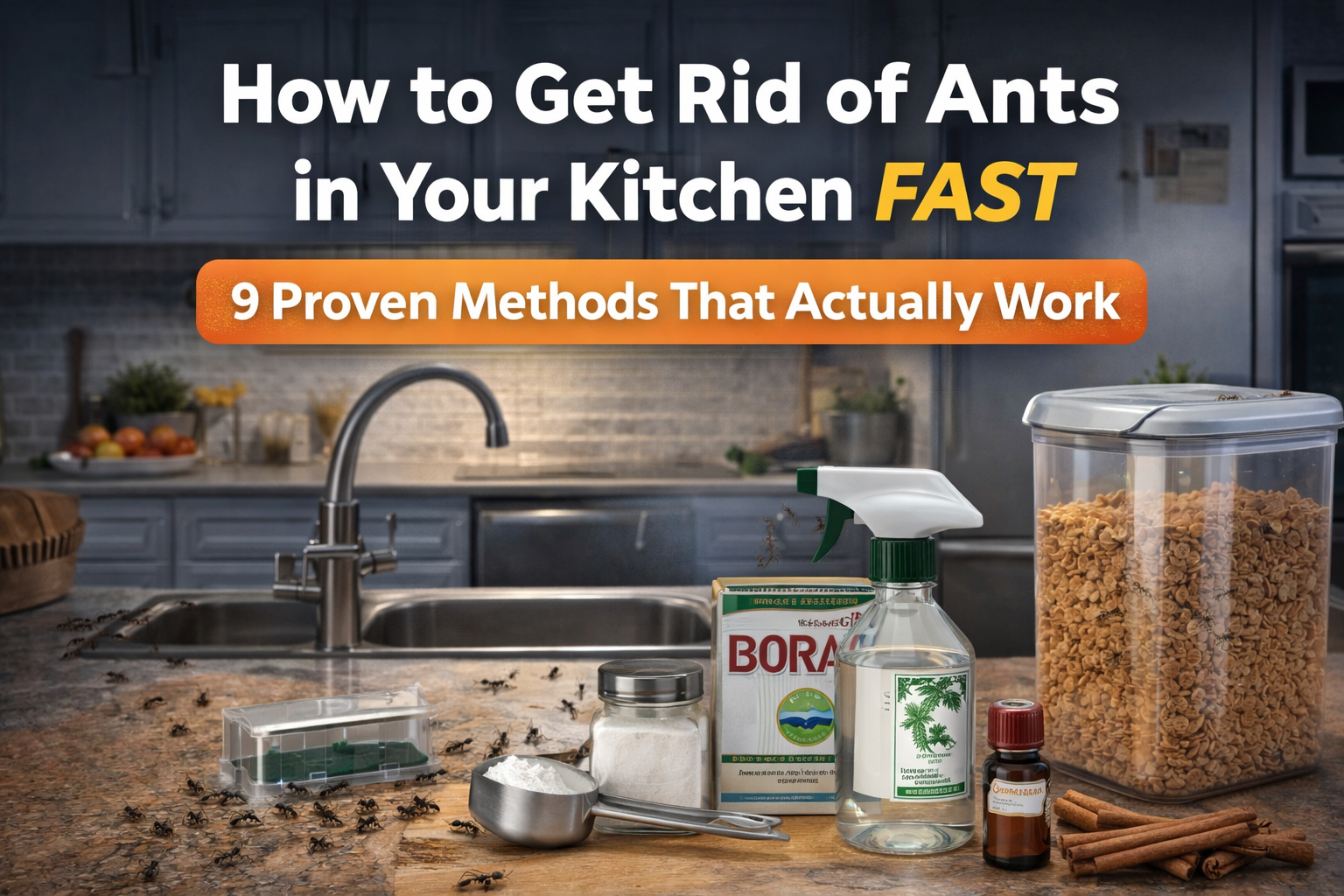
How to Get Rid of Ants in Your Kitchen Fast: 9 Proven Methods That Actually Work
How to Get Rid of Ants in Your Kitchen Fast
Few things are more frustrating than walking into your kitchen and finding a trail of ants marching across your countertop. Ants are constantly searching for food and water, and kitchens provide the perfect environment for them to thrive.
The good news is that you can eliminate ants and prevent future infestations with a few simple steps. By removing food sources, disrupting scent trails, and using targeted treatments, you can reclaim your kitchen quickly.
Here are the most effective ways to get rid of ants in your kitchen and keep them from coming back.
Why Ants Invade Kitchens
Ants enter homes primarily in search of food, water, and shelter. Kitchens offer easy access to crumbs, spills, sugar, and moisture, making them an ideal target.
Common reasons ants appear in kitchens include:
Food crumbs on countertops or floors
Unsealed pantry items
Sticky spills from sugary foods or drinks
Pet food left out for long periods
Moisture around sinks or pipes
Once a single ant finds food, it leaves a scent trail for other ants to follow, which is why infestations can grow quickly.
1. Clean Surfaces Thoroughly
The first step to eliminating ants is removing what attracts them.
Wipe down countertops, stovetops, and tables with a mixture of warm water and dish soap. Pay special attention to areas where food crumbs or sugary residue may accumulate.
Important areas to clean include:
Kitchen counters
Cabinets and pantry shelves
Under appliances
Dining tables and chairs
Floors near food preparation areas
Regular cleaning removes food sources and disrupts ant trails.
2. Destroy Ant Scent Trails
Ants communicate through invisible chemical trails that guide other ants to food.
You can erase these trails by cleaning surfaces with:
White vinegar and water
Lemon juice
Mild household cleaners
Spraying these solutions along ant trails helps break their navigation system and prevents more ants from following.
3. Seal Entry Points
Even small cracks can allow ants to enter your home.
Inspect common entry points such as:
Window frames
Door thresholds
Baseboards
Wall cracks
Utility pipe openings
Seal gaps using caulk or weather stripping to block ants from getting inside.
4. Store Food in Airtight Containers
Ants are highly attracted to sugar, grains, and pet food.
Keep pantry items sealed in airtight containers, especially:
Sugar
Cereal
Flour
Pet food
Snack foods
This simple step removes the main incentive for ants to enter your kitchen.
5. Use Natural Ant Repellents
Several natural ingredients can help repel ants without harsh chemicals. Check out this natural ant repellent.
Effective natural repellents include:
Cinnamon
Peppermint oil
Lemon juice
Vinegar
Coffee grounds
Placing these near entry points or ant trails can discourage ants from returning.
6. Set Ant Baits
Ant bait stations are one of the most effective ways to eliminate entire colonies.
Worker ants carry bait back to their nest, where it is shared with the colony. This process can eliminate the queen and stop the infestation at its source.
Place baits near:
Ant trails
Entry points
Under sinks
Behind appliances
Avoid spraying insecticides near bait stations, as this can prevent ants from taking the bait.
7. Fix Moisture Problems
Ants are attracted to moisture just as much as food.
Check for leaks under sinks, around dishwashers, and near refrigerators with water dispensers.
Common moisture sources include:
Leaking pipes
Condensation around appliances
Standing water in sinks
Wet sponges or dishcloths
Fixing leaks removes a key reason ants enter your kitchen.
8. Remove Outdoor Ant Sources
Many ant infestations start outside the home.
Look around your property for:
Ant hills near foundations
Wood piles close to the house
Overgrown vegetation touching walls
Cracks in the foundation
Keeping landscaping trimmed and removing outdoor nests can reduce indoor infestations.
9. Maintain a Consistent Cleaning Routine
Preventing ants requires ongoing maintenance.
Helpful habits include:
Taking out trash regularly
Sweeping floors daily
Cleaning spills immediately
Keeping sinks dry overnight
Storing pet food properly
Consistency is one of the best defenses against future ant problems.
Where Ants Hide in Kitchens
Ants often hide in areas that provide food, warmth, and moisture. If you are trying to eliminate an infestation, inspect the most common hiding spots in your kitchen.
Typical locations where ants hide include:
Under kitchen sinks near plumbing
Behind refrigerators and dishwashers
Inside cabinets and pantry shelves
Around window frames and door seals
Cracks in walls, baseboards, or flooring
Checking these areas can help you locate entry points and determine where ants are coming from.
Common Mistakes When Dealing with Ants
Many homeowners accidentally make infestations worse.
Avoid these common mistakes:
Killing visible ants without addressing the colony
Leaving food uncovered overnight
Ignoring small ant trails
Using strong sprays that scatter the colony
Focusing on the source of the infestation is the most effective strategy.
Cost of Getting Rid of Ants
Most kitchen ant infestations can be handled with inexpensive DIY solutions.
DIY ant baits: $5–$15
Natural repellents: $5–$20
Store-bought ant traps: $10–$25
Professional pest control services usually cost between $150 and $400, depending on the severity of the infestation.
For most kitchens, simple treatments like bait traps and cleaning routines are enough to eliminate ants without needing professional help.
Final Thoughts
Ants in the kitchen are a common problem for homeowners, but they are usually easy to eliminate with the right approach.
By removing food sources, sealing entry points, and using targeted treatments like ant bait, you can stop infestations quickly and prevent them from returning.
A clean kitchen and consistent maintenance are the best long-term defenses against unwanted ants.
Frequently Asked Questions
Why do ants suddenly appear in my kitchen?
Ants typically appear when they find a food source. Once one ant discovers food, it leaves a scent trail that attracts others.
Do ants go away on their own?
Usually not. If a food source remains available, the colony will continue sending more ants.
What smell do ants hate the most?
Ants dislike strong scents such as vinegar, peppermint oil, lemon, and cinnamon.
How long does it take to get rid of ants?
With proper baiting and cleaning, most ant infestations can be eliminated within several days to a week.