
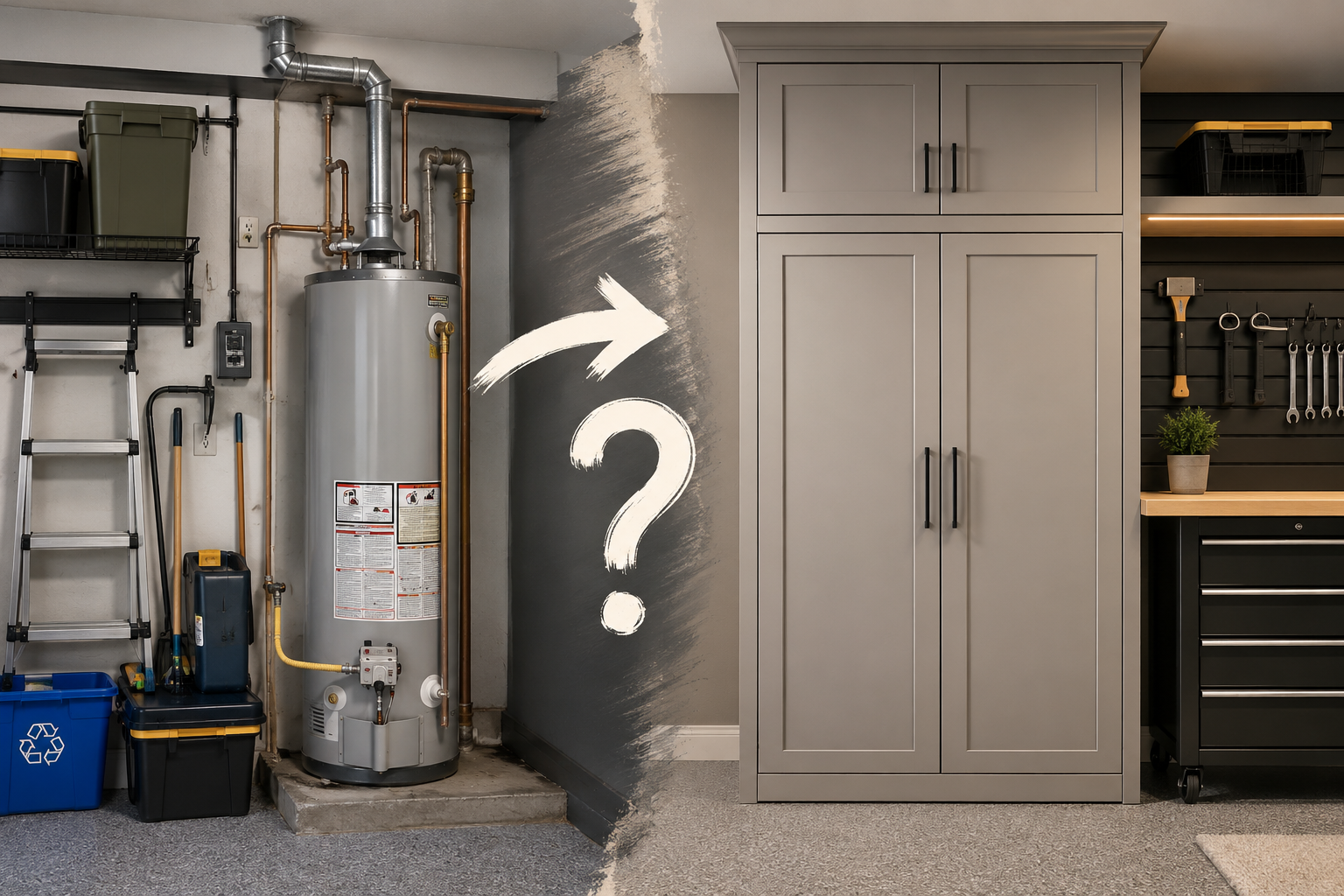
21 Brilliant Ways to Hide Your Water Heater
Walk into almost any garage and you’ll notice the same thing.
A bulky water heater tucked into the corner. Exposed plumbing running across the wall. Electrical conduit, water shutoff valves, internet cables, storage bins, and cleaning supplies all competing for attention.
Even a spotless garage can feel cluttered when utility equipment is left exposed.
The good news? You don’t need an expensive remodel to dramatically improve the appearance of your garage. With thoughtful planning, you can hide your water heater, organize surrounding utilities, and create a clean, custom-built look that feels like it came straight from a luxury home.
Better yet, many of these projects also add valuable storage, improve organization, and make everyday life a little easier.
In this guide, we’ll cover everything you need to know before building a water heater enclosure, including important safety considerations, design inspiration, material recommendations, budgeting tips, and the best products to help you complete the project.
Whether you’re looking for a simple weekend DIY project or planning a complete garage makeover, this guide will help you make the right decisions from the start.
Table of Contents
- Why Homeowners Hide Their Water Heaters
- Is It Safe to Enclose a Water Heater?
- Gas vs. Electric Water Heater Requirements
- Before You Build: Measure First
- Water Heater Enclosure Planning Checklist
- Garage Design Styles to Consider
- Materials That Last
- Estimated Project Costs
- 21 Brilliant Water Heater Enclosure Ideas
- Frequently Asked Questions
Recommended Products for Hiding a Water Heater
Whether you’re building a simple enclosure or a complete garage storage wall, the right materials and hardware can make your project easier, safer, and more durable. The products below are among the most popular choices for creating a clean, organized utility space.
| Product | Best For | Why We Recommend It |
|---|---|---|
| Heavy-Duty Modular Garage Cabinet System | Complete garage makeovers | Hides utilities while adding secure storage and a built-in appearance. |
| Steel Tall Storage Cabinet | Utility closets | Durable, lockable, and moisture resistant for garage environments. |
| Cabinet-Grade Plywood (3/4″) | DIY enclosures | Strong, paintable, and ideal for custom cabinetry. |
| PVC Trim Boards | Trim and access panels | Waterproof, rot resistant, and easy to maintain. |
| Decorative Wood Slat Wall Panels | Modern garage designs | Conceals utilities while allowing airflow and creating a designer look. |
| Sliding Barn Door Hardware Kit | Small garages | Saves floor space while providing full access to the enclosure. |
| Louvered Utility Doors | Gas water heater enclosures | Promotes ventilation while hiding equipment. |
| Motion Sensor LED Cabinet Lights | Utility closets | Automatically illuminates the enclosure during maintenance. |
| Heavy-Duty Adjustable Shelving | Storage above the water heater | Maximizes vertical space for bins and supplies. |
| Wall-Mounted Pegboard System | Tool organization | Keeps frequently used tools organized and within reach. |
| Ceiling Storage Rack | Seasonal storage | Uses overhead space for holiday decorations and bulky items. |
| Plastic Storage Bins with Locking Lids | Garage organization | Protects items from dust and moisture while keeping everything labeled. |
| Label Maker | Organized storage | Quickly identify bins, shelves, and maintenance supplies. |
| Soft-Close Cabinet Hinges | Cabinet doors | Provides a premium feel and reduces wear on doors. |
| Matte Black Cabinet Pulls | Modern cabinet upgrades | Gives DIY cabinets a custom-built appearance. |
| Magnetic Cabinet Catches | Utility doors | Keeps enclosure doors securely closed without visible hardware. |
| Construction Adhesive | Panel installation | Strong bond for trim, slat walls, and decorative panels. |
| Paintable Caulk | Finishing work | Creates seamless joints for a professional finish. |
| Garage Workbench with Drawers | DIY workstations | Adds valuable workspace while integrating with the utility enclosure. |
| Epoxy Garage Floor Coating Kit | Complete garage makeover | Brightens the space, protects concrete, and complements new cabinetry. |
Our Top Picks
If you’re looking for the biggest improvement with the least amount of effort, these are our favorite upgrades:
🏆 Best Overall: Heavy-Duty Modular Garage Cabinet System
💰 Best Budget Upgrade: Motion Sensor LED Cabinet Lights
🛠️ Best DIY Material: Cabinet-Grade Plywood
🏠 Best Premium Upgrade: Complete Garage Cabinet Storage Wall
✨ Best Modern Look: Decorative Wood Slat Wall Panels
Why Homeowners Are Hiding Their Water Heaters
A garage is no longer just a place to park vehicles.
For many families, it’s also:
- A workshop
- A home gym
- A hobby space
- A gardening center
- A sports equipment storage area
- A home improvement workspace
As garages become extensions of our living spaces, exposed mechanical equipment becomes much more noticeable.
Hiding your water heater isn’t simply about appearances. It’s about creating a garage that’s more organized, functional, and enjoyable to use.
Benefits of Hiding Your Water Heater
A well-designed enclosure can:
- Create a clean, built-in appearance
- Increase usable storage space
- Protect equipment from accidental damage
- Organize surrounding plumbing and wiring
- Improve resale appeal
- Reduce visual clutter
- Make the garage feel larger
- Increase workshop efficiency
Many homeowners are surprised to discover that a utility enclosure often becomes one of the most useful storage areas in the garage.
More Than Just a Water Heater
One of the biggest mistakes homeowners make is designing around only the water heater.
Instead, think of the entire wall as a “utility zone.”
This area often includes:
- Water heater
- Water softener
- Whole-house filtration system
- Electrical conduit
- Plumbing pipes
- Internet modem
- Network equipment
- Irrigation controller
- Smart home hub
- Vacuum system
- Air compressor
- Utility sink
Rather than hiding one item, consider creating a coordinated utility wall that conceals everything while adding practical storage.
The result looks intentional instead of improvised.
Is It Safe to Hide a Water Heater?
Yes—but only if it’s done correctly.
Safety should always be your first priority.
The enclosure should improve the appearance of your garage without interfering with the safe operation of the appliance.
Before purchasing lumber or cabinets, answer these questions:
- Is your water heater gas or electric?
- Is it a traditional tank or tankless model?
- Does it require combustion air?
- Where are the shutoff valves?
- How will technicians access the unit?
- How will the water heater eventually be replaced?
Planning ahead now can save thousands of dollars in future repairs or modifications.
Gas vs. Electric Water Heaters
The type of water heater you own will largely determine your enclosure options.
Gas Water Heaters
Gas units produce heat through combustion.
Because of this, they generally require:
- Adequate ventilation
- Combustion air
- Access to the gas shutoff valve
- Clearance around the appliance
- Proper vent pipe routing
Blocking airflow can create dangerous conditions, so decorative enclosures should never interfere with manufacturer requirements or local building codes.
Louvered doors, slatted panels, or dedicated ventilation openings are common solutions.
Electric Water Heaters
Electric water heaters don’t require combustion air, making enclosure designs more flexible.
However, they still require:
- Service access
- Electrical access
- Drain valve access
- Pressure relief valve clearance
- Future replacement clearance
An attractive cabinet should never make maintenance more difficult.
Traditional Tank vs. Tankless
If you’re planning a long-term garage renovation, it’s worth understanding the differences between these two systems.
Traditional Tank Water Heaters
Advantages:
- Lower initial cost
- Widely available
- Simple replacement
- Familiar maintenance
Disadvantages:
- Takes up more floor space
- More difficult to conceal
- Larger footprint
Tankless Water Heaters
Advantages:
- Smaller profile
- Wall mounted
- Easier to integrate into cabinetry
- Frees up floor space
Disadvantages:
- Higher installation cost
- May require electrical or gas upgrades
If your existing water heater is nearing the end of its lifespan, it may be worth planning your enclosure with a future tankless upgrade in mind.
Before You Build: Measure Everything
One of the most common DIY mistakes is building an enclosure that’s too small.
Remember, you’re not building around today’s water heater—you’re building around every water heater that may replace it over the next 20 years.
Measure:
- Overall height
- Overall width
- Overall depth
- Distance to nearby walls
- Ceiling height
- Door swing clearance
- Pipe locations
- Vent locations
- Electrical connections
- Drain pan
- Floor drain location
Then add additional clearance for maintenance and future replacement.
Your future self—and the plumber—will thank you.
Water Heater Enclosure Planning Checklist
Before purchasing materials, work through this checklist.
Appliance Information
☐ Gas or electric
☐ Tank or tankless
☐ Age of water heater
☐ Approximate replacement timeline
Safety
☐ Ventilation requirements reviewed
☐ Shutoff valves accessible
☐ Pressure relief valve visible
☐ Drain valve accessible
☐ Required clearances maintained
Design
☐ Cabinet style selected
☐ Door type selected
☐ Ventilation solution planned
☐ Lighting planned
☐ Paint color selected
Storage
☐ Cleaning supplies
☐ Garden equipment
☐ Power tools
☐ Sports equipment
☐ Holiday decorations
☐ Automotive supplies
Planning the storage at the same time often results in a cleaner and more efficient layout.
Garage Design Styles That Work Beautifully
Instead of treating your utility enclosure as an afterthought, design it as part of the entire garage.
Modern
Characteristics include:
- Flat-panel cabinets
- Matte black hardware
- White oak accents
- Hidden lighting
- Minimalist design
Farmhouse
Popular features include:
- White shaker cabinets
- Black barn door hardware
- Wood countertops
- Warm wood tones
Industrial
Ideal for workshops.
Features include:
- Steel cabinets
- Black shelving
- Exposed wood
- Concrete-look finishes
- Metal mesh doors
Luxury Garage
Think showroom quality.
Common elements include:
- Full wall cabinetry
- Epoxy flooring
- LED lighting
- Hidden utility equipment
- Quartz countertops
- Soft-close hardware
Choosing a design style before you begin shopping helps create a cohesive, professional appearance instead of a collection of mismatched storage solutions.
The Best Materials for a Long-Lasting Enclosure
Not all building materials perform equally well in garages.
Temperature swings, humidity, and occasional moisture can quickly damage inexpensive materials.
Here’s how the most common options compare:
| Material | Moisture Resistant | Durability | Best Use |
|---|---|---|---|
| Cabinet-grade plywood | Excellent | Excellent | Custom cabinets |
| Steel | Excellent | Excellent | Garage storage systems |
| PVC trim | Outstanding | Excellent | Trim and removable panels |
| Composite panels | Excellent | Excellent | Decorative walls |
| Solid wood | Very Good | Excellent | Doors and accents |
| MDF | Poor near moisture | Fair | Interior cabinet components only |
Avoid placing MDF directly on concrete floors where moisture can cause swelling over time.
How Much Does It Cost to Hide a Water Heater?
One of the biggest questions homeowners ask is, “How much will this project cost?”
The answer depends on the style you choose.
| Project Type | Estimated Cost |
|---|---|
| Decorative privacy screen | $75–$200 |
| Curtain or divider | $30–$100 |
| DIY wood enclosure | $250–$900 |
| Sliding barn door enclosure | $300–$1,200 |
| Modular cabinet system | $1,500–$4,000 |
| Custom built-in cabinetry | $3,000–$8,000+ |
While custom cabinetry offers the most polished appearance, many homeowners can achieve a similar look with modular storage systems and thoughtful planning at a fraction of the cost.
In the next section, we’ll explore 21 of the best water heater enclosure ideas, complete with design inspiration, product recommendations, estimated budgets, and tips for choosing the right solution for your garage layout.
21 Brilliant Water Heater Enclosure Ideas for Every Garage
No two garages are exactly alike. The best enclosure for your home depends on the size of your garage, your budget, and how you use the space. Whether you’re working with a single-car garage or designing the workshop of your dreams, these ideas can help transform an unsightly utility corner into an attractive and functional feature.
1. Build a Floor-to-Ceiling Utility Closet
Best For: Most homeowners
Estimated Cost: $$
If you’re looking for the cleanest and most versatile solution, a dedicated utility closet is hard to beat.
Frame a small closet around your water heater with double doors or large access panels. The upper section can be fitted with adjustable shelving for storing cleaning supplies, paint brushes, automotive fluids, and seasonal items.
Choose moisture-resistant materials and include removable panels or wide-opening doors to make future maintenance simple.
Recommended Products
- Adjustable shelving systems
- Cabinet-grade plywood
- Soft-close cabinet hinges
- Magnetic cabinet latches
- PVC trim boards
- Paintable caulk
- Motion-activated LED lights
Pro Tip: Make the doors wide enough for future water heater replacement without removing the entire enclosure.
2. Install a Complete Garage Cabinet Wall
Best For: Garage makeovers
Estimated Cost: $$$$
Instead of hiding only the water heater, create an entire wall of built-in storage.
This approach combines:
- Tall cabinets
- Overhead storage
- Workbench
- Utility enclosure
- Tool storage
- Sports equipment storage
The water heater disappears behind matching cabinet doors while the rest of the wall becomes highly functional storage.
The finished result resembles a custom garage built by a professional contractor.
Recommended Products
- Modular garage cabinet systems
- Steel storage lockers
- Adjustable shelving
- Heavy-duty workbench
- Wall cabinets
- Overhead storage cabinets
3. Hide It Behind Decorative Wood Slats
Best For: Modern garages
Estimated Cost: $$
Wood slat walls have become one of today’s biggest interior design trends—and they work beautifully in garages.
Instead of enclosing the water heater with solid walls, install evenly spaced vertical slats.
Benefits include:
- Excellent airflow
- Contemporary appearance
- Easy maintenance access
- Minimal construction
Natural oak, walnut, cedar, or painted pine all create dramatically different looks.
Recommended Products
- Wood slat wall kits
- Decorative trim boards
- Construction adhesive
- Hidden fasteners
- Matte black screws
4. Install Sliding Barn Doors
Best For: Small garages
Estimated Cost: $$
Swinging cabinet doors require valuable floor space.
Sliding barn doors eliminate that problem while creating a stylish focal point.
Available in dozens of finishes, they work equally well with farmhouse, industrial, and modern garage designs.
Choose full-height doors if you also plan to store items above the water heater.
Recommended Products
- Sliding barn door hardware
- Soft-close rollers
- Solid wood doors
- Decorative door pulls
- Adjustable floor guides
5. Build the Enclosure Into a Workbench
Best For: DIY workshops
Estimated Cost: $$$
If your water heater sits against a side wall, consider incorporating it into a custom workbench.
The cabinet surrounding the water heater becomes one section of a larger workspace that may include:
- Tool drawers
- Pegboard
- Countertop
- Upper cabinets
- Charging station
Everything feels intentional instead of hidden.
Recommended Products
- Heavy-duty workbench tops
- Garage drawer systems
- Pegboard organization kits
- Tool holders
- Rolling storage cabinets
6. Use Louvered Utility Doors
Best For: Gas water heaters
Estimated Cost: $$
Louvered doors combine safety with style.
Their built-in ventilation helps promote airflow while concealing equipment.
They also look cleaner than exposed utilities without requiring complicated construction.
Recommended Products
- Louvered utility doors
- Vent grilles
- Soft-close hinges
- Cabinet pulls
7. Install Decorative Privacy Screens
Best For: Renters and quick upgrades
Estimated Cost: $
Sometimes the simplest solution is the best.
Freestanding decorative screens instantly hide water heaters without permanent construction.
They’re ideal for homeowners who don’t want to modify existing walls.
Popular materials include:
- Composite
- PVC
- Cedar
- Powder-coated steel
- Laser-cut aluminum
Recommended Products
- Folding privacy screens
- Decorative composite panels
- Outdoor screen kits
- Weighted bases
8. Surround It With Wall-Mounted Cabinets
Best For: Smaller garages
Estimated Cost: $$
Floating cabinets create a clean appearance while keeping the garage floor open.
Mount cabinets around the utility area, leaving adequate access where needed.
This design works especially well when paired with slat walls or a workbench.
Recommended Products
- Wall-mounted cabinets
- Floating shelves
- Steel storage cabinets
- Heavy-duty mounting rails
9. Conceal Exposed Pipes With Removable Panels
Often it’s not the water heater that’s unattractive—it’s everything attached to it.
Create removable panels that conceal:
- Plumbing
- Electrical conduit
- Drain lines
- Cable bundles
PVC trim boards are excellent because they’re waterproof, paintable, and easy to remove.
Recommended Products
- PVC trim boards
- Finish nails
- Paintable caulk
- Magnetic panel fasteners
10. Add Motion-Activated Lighting
A utility closet should never be dark.
Motion-sensing lights make inspections and maintenance much easier while giving the enclosure a premium feel.
Battery-powered models install in minutes without wiring.
Recommended Products
- Motion sensor LED light bars
- Rechargeable cabinet lights
- Magnetic work lights
- LED strip lighting
11. Install Overhead Storage Above the Enclosure
Don’t waste valuable vertical space. Install or have a professional install overhead storage.
The area above a water heater enclosure is ideal for storing:
- Holiday decorations
- Camping gear
- Luggage
- Seasonal storage bins
- Emergency supplies
Just avoid storing heavy items directly above equipment that requires frequent servicing.
Recommended Products
- Ceiling storage racks
- Heavy-duty shelving
- Plastic storage bins
- Label makers
- Storage tote organizers
12. Hide Everything With a Utility Wall
Instead of treating every utility separately, build one coordinated utility wall.
This approach conceals:
- Water heater
- Water softener
- Filtration system
- Network equipment
- Electrical conduit
- Plumbing
The result resembles custom cabinetry rather than exposed mechanical equipment.
Recommended Products
- Modular cabinet systems
- Wall panels
- Utility access doors
- Adjustable shelving
13. Create a Shaker Cabinet Wall
Shaker cabinets aren’t just for kitchens.
Their timeless appearance makes them one of the easiest ways to elevate a garage.
Paint everything the same color for a seamless built-in appearance.
Recommended Products
- Shaker cabinet doors
- Cabinet pulls
- Soft-close hinges
- Cabinet paint
14. Install a Pegboard Storage Wall
A pegboard isn’t just for tools.
Install one in front of or adjacent to your utility area for hanging:
- Extension cords
- Garden tools
- Paint brushes
- Safety glasses
- Tape measures
It keeps frequently used items accessible while reducing visual clutter.
Recommended Products
- Metal pegboards
- Pegboard hooks
- Storage baskets
- Magnetic holders
15. Add a Rolling Cabinet
Need flexibility?
A heavy-duty rolling cabinet can partially conceal a utility corner while adding valuable storage for tools and hardware.
Because it moves easily, accessing the water heater remains simple.
Recommended Products
- Rolling tool cabinets
- Locking casters
- Drawer organizers
- Foam tool inserts
16. Install Open Wood Shelving
Open shelving softens the appearance of a utility wall while providing practical storage.
Use attractive storage baskets or matching containers to reduce clutter.
Recommended Products
- Solid wood shelves
- Decorative storage bins
- Wall brackets
- Label holders
17. Build a Hidden Mechanical Room
If you’re finishing your garage, consider framing a dedicated mechanical room.
This option creates a clean, finished appearance while allowing multiple utilities to be enclosed together.
It’s especially useful in larger garages with several mechanical systems.
Recommended Products
- Interior doors
- Insulation
- Utility access panels
- Ventilation grilles
18. Upgrade to Steel Garage Cabinets
Steel cabinets are durable, moisture resistant, and nearly maintenance-free.
They’re ideal for garages in humid climates or homes where durability is a priority.
Recommended Products
- Steel cabinet systems
- Adjustable shelves
- Cabinet organizers
- Locking cabinet doors
19. Install Decorative Wall Panels
Decorative wall panels instantly elevate an unfinished garage.
Available in wood, PVC, and composite materials, they create a polished backdrop while helping conceal plumbing and conduit.
Recommended Products
- Decorative wall panels
- Composite cladding
- Wall trim kits
- Hidden fasteners
20. Design Around a Future Tankless Water Heater
If your current water heater is more than ten years old, consider planning for a future upgrade.
A tankless unit frees up floor space and creates more opportunities for storage and cabinetry.
Designing with the future in mind can prevent expensive remodeling later.
Recommended Products
- Adjustable shelving
- Modular cabinets
- Utility access doors
- Wall organization systems
21. Build a Luxury Garage Utility Wall
The ultimate solution combines everything discussed in this guide.
Imagine:
- Floor-to-ceiling cabinets
- Quartz countertop
- Full workbench
- Hidden water heater
- LED lighting
- Slat wall organization
- Overhead cabinets
- Epoxy flooring
The result doesn’t just hide a water heater—it transforms your garage into one of the most organized and attractive spaces in your home.
Recommended Products
- Premium garage cabinet systems
- Slat wall storage systems
- Heavy-duty workbench
- Under-cabinet LED lighting
- Soft-close hardware
- Epoxy floor coating kits
- Ceiling storage racks
Which Water Heater Enclosure Is Right for You?
If you’re on a tight budget, a decorative screen or DIY wood enclosure provides the biggest visual improvement for the least money.
If you want the best balance of storage and appearance, a floor-to-ceiling utility closet or modular cabinet wall offers exceptional value.
If you’re planning a complete garage renovation, investing in a full utility wall with integrated cabinetry creates a custom-built look that enhances both organization and everyday usability.
No matter which approach you choose, remember that the best enclosure is one that combines safety, accessibility, and smart storage while complementing the overall style of your garage.
Common Mistakes to Avoid, Expert Buying Guide, FAQs
Now that you’ve seen the most popular ways to hide a water heater, it’s important to avoid the mistakes that can turn a simple garage upgrade into an expensive repair. The difference between a professional-looking enclosure and a frustrating DIY project often comes down to planning.
This final section will help you make smarter decisions, choose better materials, and create a garage that’s attractive, functional, and built to last.
10 Common Mistakes Homeowners Make When Hiding a Water Heater
Many garage makeovers look great on day one but become problematic when maintenance or replacement is needed. Avoid these common pitfalls to save yourself time, money, and frustration.
1. Forgetting About Future Replacement
Water heaters typically last 8 to 15 years.
One day, it will need to come out.
If your enclosure doesn’t allow enough clearance, you may have to dismantle cabinets or remove walls just to replace the unit.
Pro Tip: Design removable panels or oversized doors from the beginning.
2. Blocking Shutoff Valves
In an emergency, every second matters.
Always leave quick access to:
- Water shutoff valve
- Gas shutoff valve (if applicable)
- Electrical disconnect
- Pressure relief valve
Never hide these behind permanently fastened panels.
3. Ignoring Ventilation
This is one of the biggest mistakes people make.
Gas water heaters require adequate airflow.
A beautiful enclosure isn’t worth creating unsafe operating conditions.
When in doubt, choose:
- Louvered doors
- Decorative slat walls
- Ventilation grilles
4. Choosing the Wrong Materials
Garages experience:
- Heat
- Cold
- Humidity
- Occasional water leaks
Avoid inexpensive particleboard or MDF near the floor where moisture can cause swelling.
Instead, choose durable materials like:
- Cabinet-grade plywood
- PVC trim
- Steel cabinetry
- Composite panels
5. Underestimating Storage Needs
Many homeowners build an enclosure only large enough for the water heater.
A few extra inches can create valuable storage for:
- Cleaning supplies
- Paint brushes
- Shop towels
- Car care products
- Gardening supplies
Think beyond the appliance itself.
6. Poor Lighting
A dark utility closet makes maintenance difficult.
Motion-activated LED lights are inexpensive and greatly improve visibility.
7. Forgetting About Drainage
Every water heater can leak.
Make sure your design allows easy access to:
- Drain pan
- Floor drain
- Drain valve
Don’t permanently block these areas.
8. Skipping Measurements
Measure twice.
Build once.
Always verify:
- Ceiling height
- Door clearance
- Cabinet depth
- Pipe locations
- Future replacement path
9. Overlooking Garage Organization
Instead of solving one problem, solve several.
Group nearby utilities into one organized storage wall for a cleaner, more intentional appearance.
10. Prioritizing Looks Over Function
A successful project balances three things:
- Appearance
- Accessibility
- Safety
The most beautiful garage is one that’s easy to maintain.
Water Heater Enclosure Buying Guide
Choosing the right products makes a significant difference in both appearance and durability.
Here’s what to look for.
Best Cabinet Material
Steel
Pros
- Extremely durable
- Moisture resistant
- Long lifespan
- Low maintenance
Best for:
- High-use garages
- Workshops
- Humid climates
Cabinet-Grade Plywood
Pros
- Easy to customize
- Paints beautifully
- Strong
- Excellent for DIY projects
Best for:
- Built-in cabinetry
- Utility closets
- Custom storage walls
PVC
Pros
- Waterproof
- Lightweight
- Easy to cut
- Paintable
Best for:
- Trim
- Removable access panels
- Moisture-prone areas
Best Door Styles
Shaker Doors
Ideal for:
- Traditional homes
- Farmhouse garages
- Timeless designs
Flat Panel Doors
Ideal for:
- Modern garages
- Contemporary homes
- Minimalist spaces
Barn Doors
Ideal for:
- Tight spaces
- Rustic garages
- Industrial designs
Louvered Doors
Ideal for:
- Utility closets
- Ventilated enclosures
- Mechanical rooms
Best Lighting Options
Lighting is often overlooked but makes a dramatic difference.
Popular choices include:
- Motion sensor LED lights
- Rechargeable cabinet lighting
- Under-cabinet LED strips
- Linkable shop lights
- Ceiling-mounted LED fixtures
Good lighting improves both safety and functionality.
Best Storage Accessories
Once your enclosure is complete, maximize organization with accessories like:
- Adjustable shelves
- Storage bins
- Clear containers
- Drawer organizers
- Tool holders
- Label makers
- Magnetic hooks
- Wall-mounted organizers
These inexpensive additions often have the biggest impact on everyday usability.
Before and After Garage Makeover
Imagine walking into your garage today.
Before
- Water heater exposed
- Pipes visible
- Random storage bins
- Extension cords hanging
- Cleaning supplies stacked on the floor
- Sports equipment scattered
- Poor lighting
Now picture the same space after a thoughtful upgrade.
After
- Water heater hidden behind matching cabinet doors
- Built-in storage wall
- Organized shelving
- Bright LED lighting
- Clean workbench
- Labeled storage containers
- Decorative finishes
- Open floor space
The transformation isn’t just visual—it changes how the garage functions every day.
Frequently Asked Questions
Is it okay to enclose a water heater?
Yes, as long as the enclosure complies with the manufacturer’s installation instructions and local building codes. It should provide proper access for maintenance, preserve required clearances, and, for gas models, allow adequate ventilation.
Can I build the enclosure myself?
Many homeowners with basic carpentry skills can build a simple enclosure over a weekend. More complex cabinet systems or garage remodels may benefit from professional installation.
What’s the least expensive way to hide a water heater?
Decorative privacy screens, curtains designed for utility spaces, or a basic DIY plywood enclosure are among the most budget-friendly options.
Can I add shelves above my water heater?
In many cases, yes. Shelving above the appliance can provide valuable storage, but it should not interfere with maintenance access or manufacturer-recommended clearances.
Should I paint my garage cabinets?
Absolutely. Painting cabinets, trim, and surrounding walls in a consistent color creates a custom-built appearance and helps visually minimize utility areas.
Is a modular garage cabinet system worth the investment?
For homeowners looking to maximize storage and improve the appearance of their garage, modular cabinet systems often provide one of the best long-term values. They offer flexibility, durability, and the ability to expand as your storage needs grow.
Garage Organization Checklist
As you complete your project, use this checklist to create a truly organized garage.
✔ Hide utility equipment
✔ Install adjustable shelving
✔ Add overhead storage
✔ Organize power tools
✔ Label storage bins
✔ Store seasonal decorations
✔ Install better lighting
✔ Add wall-mounted organizers
✔ Keep maintenance items accessible
✔ Leave clear walkways
Small improvements in each area add up to a garage that’s easier to use and more enjoyable to spend time in.
Related Garage Improvement Projects
If you’re upgrading your utility area, consider tackling a few additional projects to complete the transformation.
- Install epoxy garage flooring
- Upgrade to LED garage lighting
- Add ceiling-mounted storage racks
- Build a custom workbench
- Install a slat wall organization system
- Replace worn shelving with modular cabinets
- Organize lawn and garden equipment
- Add a dedicated recycling center
- Create a sports equipment storage zone
- Improve garage insulation
These complementary upgrades can make your garage feel like an extension of your home rather than just a place to park your car.
Final Thoughts
Your water heater may be one of the most overlooked features in your garage, but it doesn’t have to dominate the space.
With the right combination of planning, storage, and design, you can transform an unattractive utility corner into a polished, organized feature that enhances both the look and function of your garage.
Whether you choose a simple privacy screen, a custom-built utility closet, or a complete wall of cabinetry, the best solution is one that balances safety, accessibility, and smart storage.
By thinking beyond the water heater and designing an organized utility wall, you’ll create a garage that’s easier to maintain, more enjoyable to use, and better prepared for future projects.
At HomeAddressed.com, we believe every part of your home deserves thoughtful design—even the spaces most people overlook. With a little planning and the right products, your garage can become one of the most organized and valuable areas of your home.
Affiliate Disclosure: HomeAddressed.com participates in affiliate advertising programs designed to provide a way for websites to earn commissions by linking to products. If you click on an affiliate link and make a purchase, we may earn a small commission at no additional cost to you. These commissions help support our website and allow us to continue creating free home improvement guides, buying advice, and DIY resources. We only recommend products we believe are high quality and would use ourselves.