
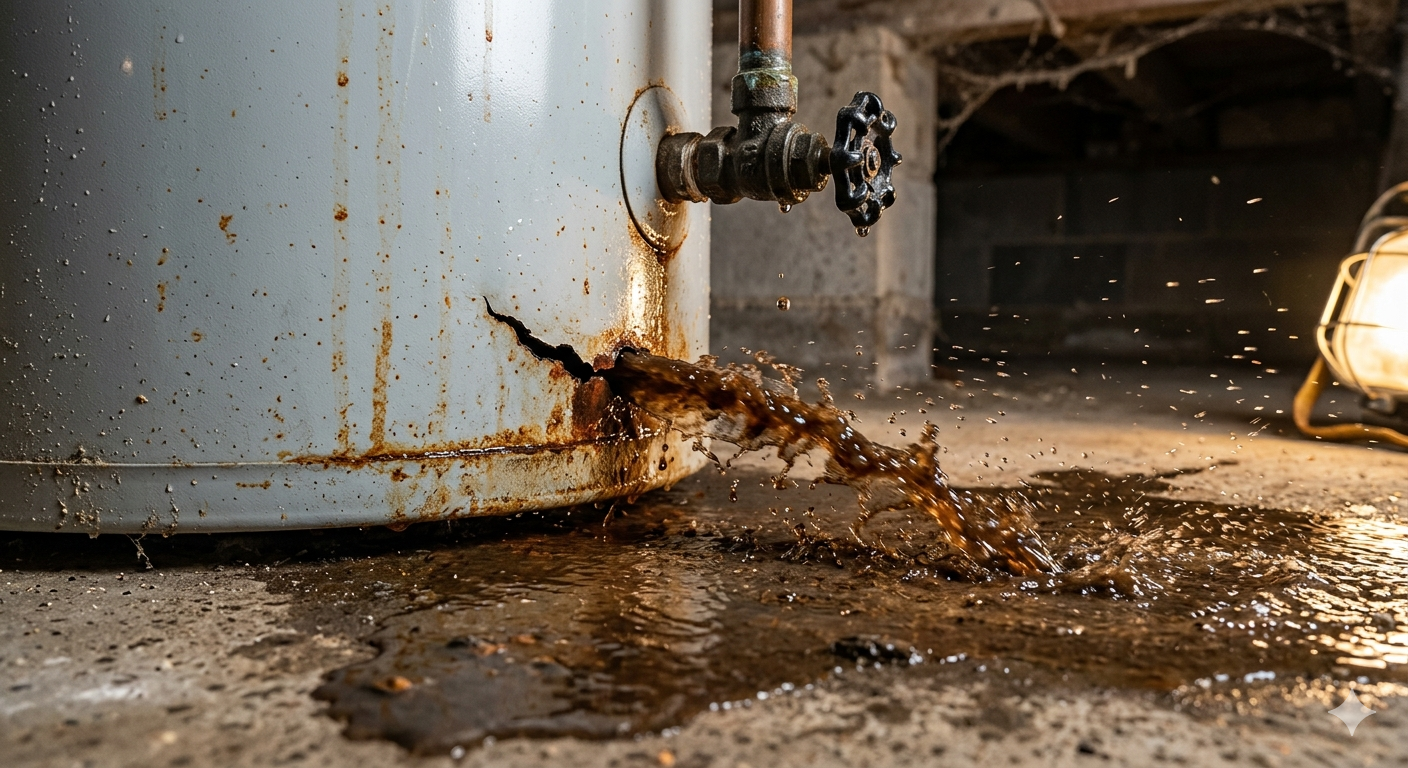
5 Warning Signs Your Water Heater Is About to Flood Your Basement
Warning Signs Your Water Heater Is About to Fail
Most people don’t think about their water heater until they’re standing in two inches of gray water in their basement. By then, it’s a $5,000 problem. If you want to avoid a catastrophic failure, you have to look for the subtle signals that the metal is giving up.
If you’ve realized your tank is a ticking time bomb, stop looking at every model on the market. Most of them are the same generic parts with a different sticker. Focus on the ones that actually last.
| Brand / Model | Type | Why It’s Considered One of the Best | Best For | Unit Cost Range | Installed Cost Range | Typical Lifespan |
|---|---|---|---|---|---|---|
| Rheem Performance Platinum 50-Gallon Gas | Gas Tank | Reliable, strong recovery speed, widely available parts, solid efficiency | Most average households (3–5 people) | $700–$1,100 | $1,500–$3,500 | 10–15 years |
| Bradford White RG350S6N 50-Gallon Gas | Gas Tank | Contractor-preferred durability, high-quality components, consistent performance | Long-term homeowners wanting reliability | $1000–$1,500 | $1,500–$3,500 | 12–15 years |
| A.O. Smith Signature 100 Electric | Electric Tank | Affordable, simple install, dependable entry-level option | Small to medium households | $500–$700 | $1,200–$2,500 | 8–12 years |
| Rinnai RU199iN Tankless Gas | Gas Tankless | Endless hot water, very high efficiency, long lifespan | Large households, heavy hot-water usage | $1,500–$2,500 | $2,500–$7,500 | 15–20 years |
| Rheem Performance Platinum Smart Tankless | Gas Tankless | Smart monitoring, high flow rate, efficient energy usage | Tech-enabled homes, efficiency-focused buyers | $900–$1,500 | $2,500–$7,500 | 15–20 years |
| Rheem Hybrid Heat Pump Water Heater | Hybrid (Electric + Heat Pump) | Extremely energy-efficient, lowest long-term operating cost | Energy savings priority, long-term ownership | $1,500–$3,500 | $3,000–$6,500 | 13–15 years |
If you’re comparing strictly on value vs cost, here’s the quick takeaway:
- Best overall value: Rheem Performance Platinum 50-Gallon Gas
- Most durable long-term: Bradford White Gas
- Lowest upfront cost: A.O. Smith Electric
- Best long-term efficiency: Rinnai Tankless or Rheem Hybrid
- Best premium upgrade: Rheem Smart Tankless
Pick Your Trade-off
If you want the safest bet, get the Rheem with the auto-shutoff. If it leaks while you’re at work, it saves your basement. If you want something that just works for fifteen years without a fuss, find a plumber who will install a Bradford White.
Avoid the cheapest “builder grade” models at big-box stores. They use plastic drain valves that crack the first time you try to flush the tank. Spend the extra $200 now so you aren’t doing this again in six years.
1. The “Gravel in a Dryer” Sound
If you hear a popping or rumbling noise while the tank is heating, it’s a sign of heavy sediment buildup. This layer of scale traps heat, which eventually causes the tank’s lining to crack. If you hear this, you’re already on borrowed time.
The Fix: Buy a heavy-duty rubber garden hose, like a Flexzilla or Continental, that won’t kink when you try to drain the hot water. Hook it to the drain valve at the bottom and let it run until the water is clear.
2. Rusty Water from the Hot Tap
When your “hot” water looks like tea but the “cold” side stays clear, the inside of your tank is rusting away. This usually means the sacrificial anode rod has failed, and the water has started eating the steel walls of the tank itself.
The Fix: You can extend the life of a tank by replacing the anode rod every few years. Look for a magnesium or aluminum rod compatible with your brand. If the water is already deep brown, the rod is gone and the tank is next.
3. Puddles Around the Base
A small amount of water on the floor isn’t “normal” condensation. It’s a leak. Even a tiny damp spot near the bottom of the heater is a signal that the inner tank has a pinhole. These never stay small; they eventually turn into a full-scale burst.
The Fix: Install a smart water leak detector like the Govee or Moen Flo near the base of the unit. These will hit your phone with an alert the second moisture touches the floor, saving you from a midnight surprise.
4. The Age of the Unit
Check the manufacturer’s label. If your water heater is more than ten years old, the clock is ticking. Most tanks are designed to last about a decade. If you’re at year twelve, you aren’t being “frugal” by waiting—you’re just gambling with your basement.
5. Persistent Metallic Taste or Smell
If your hot water smells like iron or has a metallic tang, the tank’s internal coating is breaking down. This is the final stage before the metal becomes thin enough to rupture under pressure.
The 60-Second Emergency Plan
If the tank bursts while you’re reading this, do not panic. Go to the unit and follow these steps immediately:
- Shut off the water: Look for the cold water pipe going into the top of the heater. Turn the lever or wheel until it stops.
- Kill the power or gas: Flip the dedicated breaker in your electrical panel. For gas units, turn the dial on the front of the heater to “Off.”
- Check the Expansion Tank: If you don’t have a small, basketball-sized tank sitting on the pipes above your heater, your system is under constant stress. Adding a $50 expansion tank can stop pinhole leaks from forming in the first place.
The Replacement Cost Reality Check
Stop looking for a “comprehensive” quote and look at the real numbers. A new tank usually costs between $600 and $1,200. Labor from a reputable plumber will run you another $500 to $1,000. If you don’t have $2,500 ready for an emergency, start your maintenance today.
FAQ
Is a leaking water heater always an emergency? Yes. There is no such thing as a “safe” leak on a pressurized tank. A small drip today can become a 50-gallon-per-minute flood tonight.
How often should I flush my water heater? Once a year. If you have hard water, do it every six months. It takes twenty minutes and costs nothing but the price of a hose.
Can I just patch a leak in the tank? No. You cannot patch a pressurized steel tank. If the tank itself is leaking, the unit is dead. Any “fix” you try will fail under the heat and pressure of normal use.
Why does my hot water smell like rotten eggs? This is usually a bacterial reaction with the anode rod. If you also see black soot around the base of a gas heater, turn it off immediately. That’s a sign of a blocked exhaust and a carbon monoxide risk.
Does a water heater pan actually work? A $30 plastic drain pan won’t stop a burst, but it will catch slow leaks and direct them to a floor drain. It’s the cheapest insurance you can buy when installing a new unit.