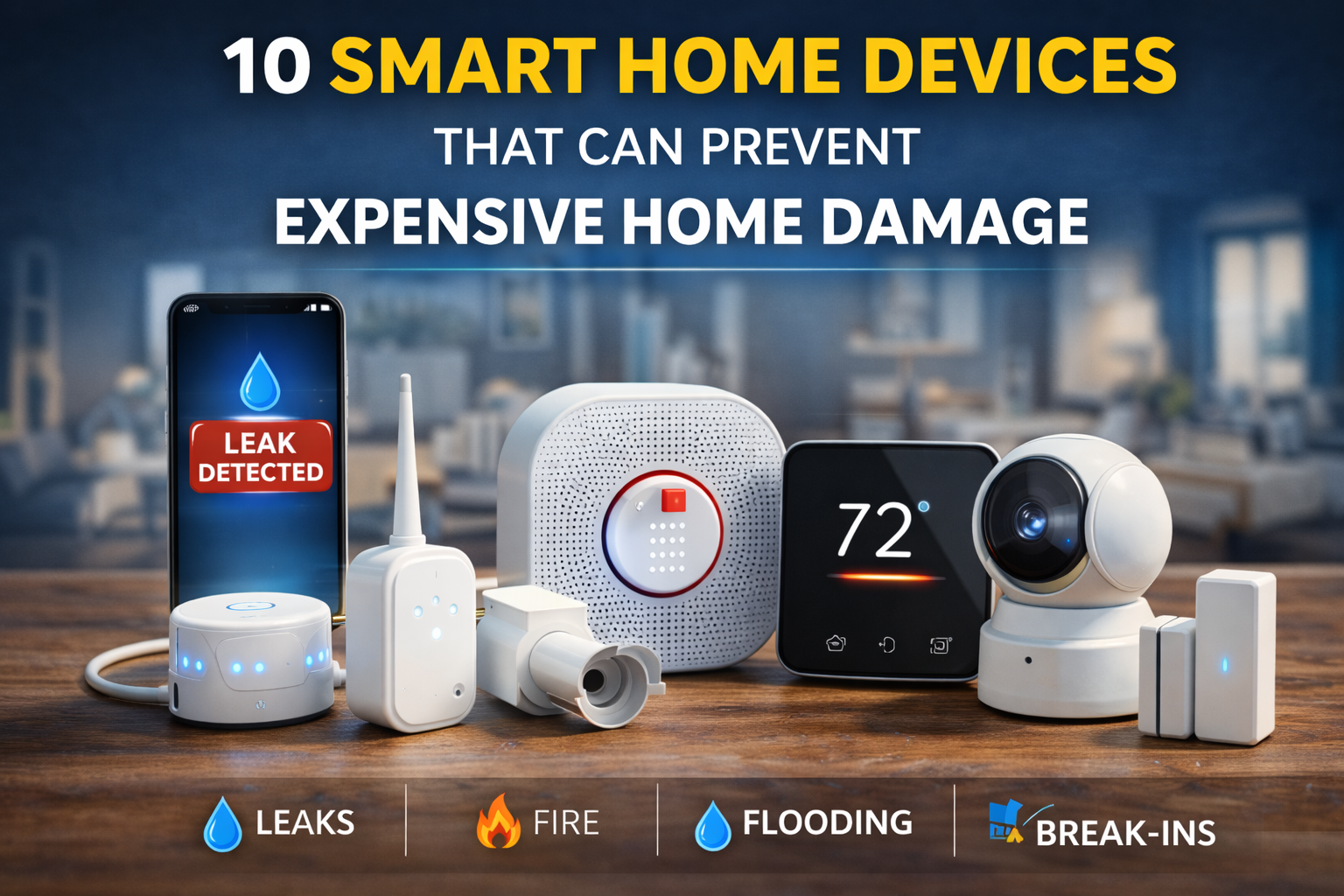
10 Smart Home Devices That Can Prevent Expensive Home Damage
Smart Home Devices That Can Prevent Expensive Home Damage
Home damage can happen when you least expect it. Water leaks, electrical issues, fires, and even extreme temperatures can cause thousands of dollars in repairs if they go unnoticed.
Fortunately, modern smart home technology can help homeowners detect problems early. Many smart devices monitor your home 24/7 and send alerts directly to your phone when something unusual happens.
Here are 10 smart home devices that can help prevent costly damage and protect your home.
Smart Home Protection Device Comparison
| Device | Prevents | Typical Cost | Best Location |
|---|---|---|---|
| Water Leak Detector | Water damage | $20–$80 | Under sinks |
| Smart Smoke Detector | Fire damage | $80–$150 | Hallways, bedrooms |
| Smart Thermostat | Frozen pipes | $100–$250 | HVAC system |
| Smart Water Shutoff Valve | Flooding | $150–$500 | Main water line |
| Smart Security Camera | Break-ins and vandalism | $50–$200 | Entrances |
| Garage Door Sensor | Security risks | $30–$100 | Garage |
| Humidity Sensor | Mold damage | $20–$60 | Basements |
| Electrical Monitor | Electrical fires | $100–$300 | Breaker panel |
| Flood Sensor | Rising water levels | $20–$80 | Basements |
| Door and Window Sensors | Security and storm risks | $20–$80 | Doors and windows |
The Most Expensive Home Damage Problems
Many homeowners underestimate how expensive home damage can become if problems are not detected early.
Some of the most costly issues include:
Water damage from leaks or flooding
Fire damage caused by electrical problems
Mold growth due to high humidity
Frozen pipes during winter
Structural damage from unnoticed water leaks
These problems often start small but become extremely expensive when left untreated. Smart home devices help detect these issues before serious damage occurs.
1. Smart Water Leak Detectors
Water damage is one of the most common and expensive home repair problems.
Smart water leak detectors monitor areas prone to leaks, such as under sinks, near washing machines, or around water heaters. If moisture is detected, the device sends an alert to your smartphone so you can act quickly.
Early detection can prevent serious structural damage and mold growth.
2. Smart Smoke and Carbon Monoxide Detectors
Traditional smoke alarms alert you when you are home, but smart smoke detectors send alerts directly to your phone even when you are away.
These devices detect smoke and dangerous carbon monoxide levels, helping homeowners respond quickly to potential fire hazards.
Many models also allow you to silence false alarms remotely.
3. Smart Thermostats
Temperature fluctuations can cause problems like frozen pipes or excessive humidity.
Smart thermostats monitor indoor temperatures and adjust heating or cooling automatically. Many also allow homeowners to monitor and control their home climate remotely.
This helps prevent damage during extreme weather conditions.
4. Smart Water Shutoff Valves
A smart water shutoff valve can automatically stop the flow of water if a major leak is detected.
These systems monitor water usage throughout the home. If unusual water flow occurs, the valve shuts off the main water supply and alerts the homeowner.
This technology can prevent catastrophic flooding and major water damage.
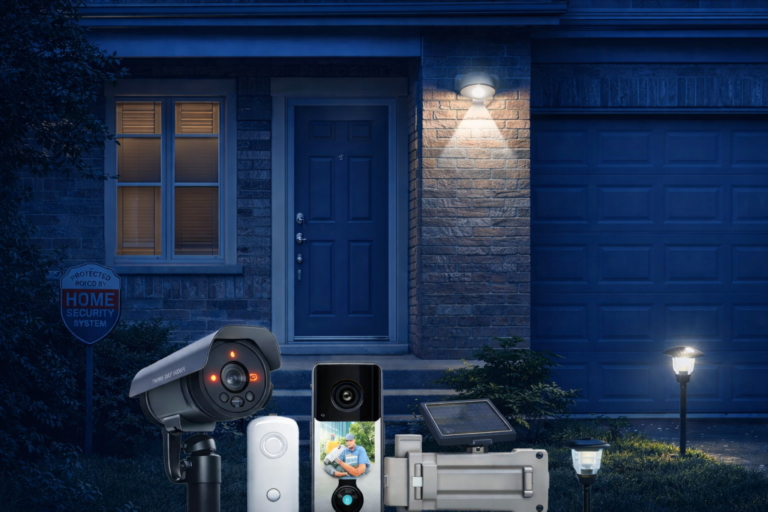
5. Smart Security Cameras
Security cameras help homeowners monitor activity around their property and detect suspicious behavior.
Many smart cameras include motion detection, night vision, and mobile alerts. These features allow homeowners to monitor their property remotely and respond to potential security threats.
Outdoor cameras can also help detect vandalism or storm damage.
6. Smart Garage Door Sensors
Garage doors are often left open accidentally, which can create security risks.
Smart garage door sensors send alerts if the door is left open and allow homeowners to close it remotely using a smartphone app.
This helps protect your home from intruders and weather damage.
7. Smart Humidity Sensors
Excess humidity can lead to mold growth, wood rot, and structural damage.
Smart humidity sensors monitor indoor moisture levels and send alerts if humidity rises too high.
These sensors are especially useful in basements, bathrooms, and crawl spaces.
8. Smart Electrical Monitors
Electrical issues can lead to fires, appliance damage, and high energy costs.
Smart electrical monitors track power usage and identify unusual activity that could indicate wiring problems or failing appliances.
These devices help homeowners detect electrical risks early.
9. Smart Flood Sensors
Flood sensors are designed to detect rising water levels in areas prone to flooding.
These devices are commonly placed in basements, near sump pumps, or in laundry rooms. If water begins to accumulate, the sensor sends an alert so homeowners can respond quickly.
This early warning can prevent severe water damage.
10. Smart Door and Window Sensors
Door and window sensors detect when entry points are opened unexpectedly.
These devices are often used as part of smart security systems, but they also help monitor whether windows or doors are left open during storms or extreme weather.
Alerts allow homeowners to close windows or secure doors before damage occurs.
Best Places to Install Smart Home Protection Devices
Certain areas of a home are more vulnerable to damage than others. Installing smart sensors in these locations helps detect problems early.
Recommended locations include:
Under kitchen and bathroom sinks
Behind refrigerators with ice makers
Near washing machines
Around water heaters
Basements and crawl spaces
Near sump pumps
Inside garages
Near HVAC systems
These high-risk areas are where many home problems begin.
Common Mistakes When Using Smart Home Devices
Some homeowners install smart devices but fail to use them effectively.
Common mistakes include:
Installing sensors in the wrong locations
Ignoring alerts or notifications
Not replacing batteries regularly
Failing to connect devices to WiFi
Not testing devices periodically
Checking and maintaining these devices ensures they work properly when needed.
Frequently Asked Questions
Do smart home devices actually prevent damage?
Yes. These devices provide early warnings that allow homeowners to respond before serious damage occurs.
Do smart home devices require WiFi?
Many smart home devices connect to WiFi so they can send alerts to your smartphone.
How many smart sensors does a home need?
Most homes benefit from several sensors placed in high-risk areas such as kitchens, basements, and laundry rooms.
Final Thoughts
Smart home technology makes it easier than ever to monitor your home and detect potential problems early.
Devices like leak detectors, smoke alarms, humidity sensors, and water shutoff valves provide valuable protection by alerting homeowners before small issues turn into expensive repairs.
Installing a few smart home protection devices can help safeguard your property, reduce risks, and provide peace of mind.